Skip to content Skip to navigation

Lemann Center Webinars

Lemann Center joins the National Symposium on Active Methodologies

Rodrigo Barbosa e Silva, Postdoc at the Lemann Center, recorded a class to the National Symposium on Active Methodologies.  The Secretariat of Higher Education of Parana is responsible for the organization and broadcasting of the event.  It debates essential themes for education professionals looking for adopting active methodologies in schools.

Mr. Rodrigo offered a lecture on the maker movement, robotics education, and technology on education as a practice of freedom. According to Rodrigo, society continues to adopt, adapt, and expand the employment of digital resources in almost every aspect of human life. He highlights that technology is also a democratic aspect of our current society, whereas they are indissociable from social communication and creation.

These are other topics covered during the Symposium: hybrid education, cooperative learning, interdisciplinary actions using Information and Communication Technologies, new learning spaces, and educational innovation. For more information, please follow to https://sma.nead.unicentro.br/

Fostering a New Brazilian National Innovation Policy

The Lemann Center collaborated with the debates to foster a new National Innovation Policy in Brazil. The Postdoctoral Research Scholar Rodrigo Barbosa e Silva represented the Lemann Center in a workshop composed by several state-level public funding agencies (such as Fapesp, Fundação Araucária, Fapemig), by the Ministry of Science, Technology, Innovation and Communication; the Brazilian National Economic Development Bank (BNDES); and by other actors such as Caixa Econônica Federal and municipalities. The Center for Strategic Studies and Management in Science, Technology, and Innovation (CGEE) has led this workshop in Brasilia, October 2nd.

During his talk in Brasilia, Mr. Rodrigo explained that Brazil lags behind other nations because the country does not have a coherent and nation-wide adopted strategy towards innovation. Bringing examples from Russia, China, and the USA, Rodrigo demonstrated that Brazilian authorities should stimulate the national ecosystem of universities and different agencies, following international practices particularly taken by the other components of the BRICS.

According to Rodrigo, Brazil has compelling cases of innovation in several cities, and these success cases are local initiatives bringing together researchers, communities, and industry. Rodrigo has debated the importance of bringing innovation and technology to the center of public policies on education, science, and development.

The Lemann Center Postdoc argued that a national strategy requires international comparison. However, local practices must be observed and fostered to amplify Brazilian cases in innovation. It demands a better level of integration between agencies, a better understanding of the regional differences in Brazil, and a democratic debate about the potentials and perils of digital technologies to the Brazilian people.

The National Innovation Policy is a demand from the Ministry of Science, Technology, Innovation, and Communication. The Strategy aims to empower the ecosystem of innovation in Brazil to promote practical actions towards equalitarian development. Notwithstanding, "the only way to encourage real and democratic development is recognizing what already happens in Brazil," concluded Mr. Barbosa e Silva.

More information can be found at https://www.cgee.org.br/

Ana Machado moderando debate sobre educação

Ana Machado, master student in Policy, Organization and Leadership Studies, moderated a discussion about education at BRASA Summit on Northeastern University (conference about Brazil organized by brazilians studying abroad). The participants were: Rossieli Soares (São Paulo State Secretary of Education), Priscila Cruz (Executive Diretor at Todos Pela Educação) and Erica Butow (founder of Ensina Brasil). They talked about Brazil future agenda to education, necessary changes in brazilian schools and challenges to improve educational results.

Educational Policies in Brazil: What can we learn from real cases of implementation?

Educational Policies in Brazil: What can we learn from real cases of implementation?

Educational Policies in Brazil: What can we learn from real cases of implementation?

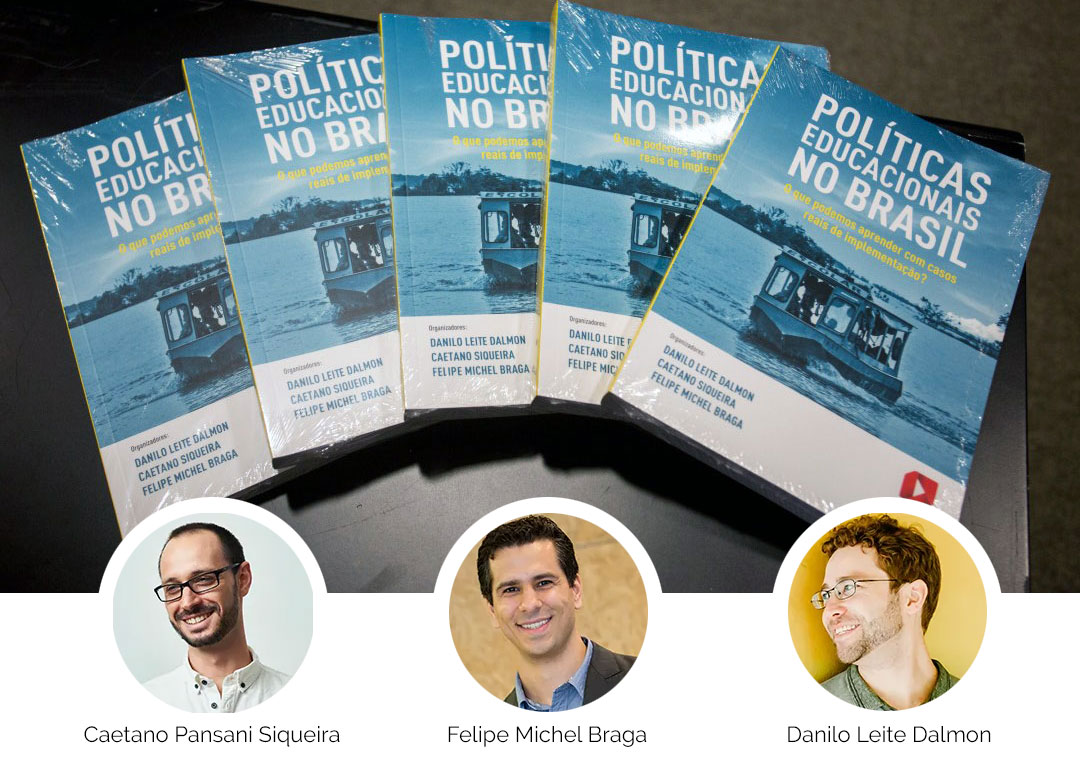
That is a question that brought three Brazilian alumni from the Graduate School of Education at Stanford together. They were fellows at the Lemann Center during their time as Master students and were inspired by a course that took an innovative approach to deal with this subject at the University. After going back to Brazil, Felipe Michel Braga (Education MA 2015), Danilo Dalmon (Education MA 2015), and Caetano Siqueira (Education MA 2017) decided to join forces and build a collection of six cases studies, at the subnational level, covering all country regions.


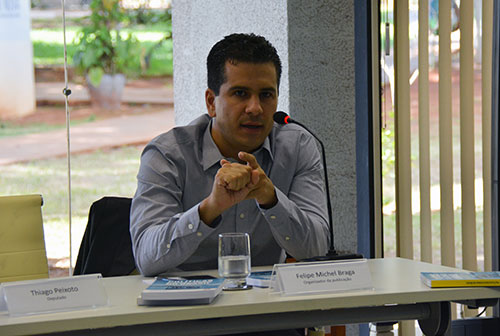
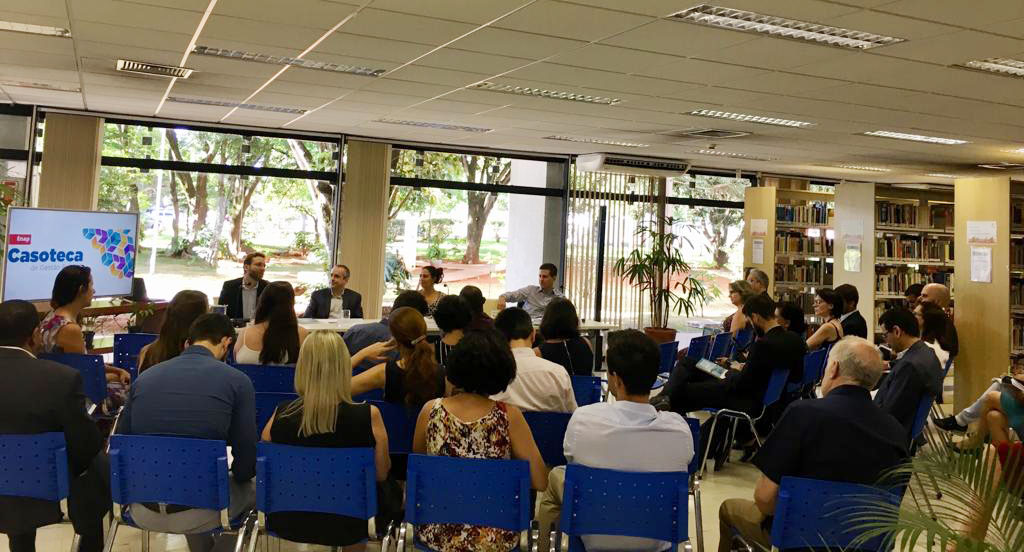
Felipe Michel Braga at the book release event at ENAP in Brasilia

This book is a contribution to the improvement of leadership preparation to deal with Brazilian public educational reforms, through the study of real experiences, with careful analysis of facts and a robust theoretical background. At the same time, it disseminates the case studies teaching methodology, which is still uncommon in Brazilian schools of education and public management. The digital version of the book is available for free at the project website, only in Portuguese.

These cases are not reports of “successful” policies, as we often see available, the organizers say. Their point of views are not unique, in such a way that the readers must analyze the decisions and actions, and by them own, identify the strengths and weaknesses of each implementation.

Click here to download the digital version.

Check below some of the main takeaways and more information shared by one of the organizers, Felipe Michel Braga:

What is this work origin?

We all, the three organizers, attended a course at Stanford University called Leading Change in Public Education (EDUC 447X). This course explores the experiences of public education leaders in districts and states in the United States. It inspired us a lot. We thought “we need that in Brazil”. On one hand, because it was about real issues and real decisions. On another hand, because it had an innovative approach on teaching, bringing students to a center role during class, raising the limits and alternatives of decision makers during discussions, defying students to figure out what they would do in those circumstances. In addition, on each class one of the protagonists from the case joined the students on the discussions. Besides that, the method of using case studies is still particularly uncommon in schools of education. That was the gap we were looking forward to fulfill.

How was the experience of selecting the cases and organizing the book?

The process had an interesting collaborative perspective since the beginning. As we advanced, we invited David Plank, one of the Lemann Center directors and an expert in educational policies implementation, and other specialists to join a committee that helped us to select the appropriate stories to cover. They also reviewed the first versions of each chapter. Cleuza Repulho, Pilar Lacerda, Luis Felipe d’Avila, Eugênio Mussaki, Mozart Ramos, and Ricardo Henriques were our strong references to confirm the cases selection we were looking for. Besides them, we got the financial and operational support from Fundação Lemann, Instituto Natura, Instituto Unibanco, and Fundação SM. With all this, we hired journalists and scholars with expertise in education to collect, summarize, and analyze data, write the cases and discuss them with us. To help readers have a contextualized view of the cases, we also produced chapters on the history of education in public policies in Brazil, public management and leadership concepts.

Why did you opt for these six particular cases?

We decided the cases should present policies with bold goals and big challenges to implement, but also should come from all parts of Brazil. They should be representative of issues that any given leader would face, but contextualized to each environment. In Amazonas, for instance, it is quite complex to deliver education services to small communities spread throughout the state, connected by rivers that are navigable in part of the year, but not always. How to deliver secondary education in such context? That innovation was bold and not clear from the beginning. In the city of Belo Horizonte, there was a curious organization of political actors: the mayor from PSB, a socialist party, the secretary of education from PT, the workers party. Nevertheless, they took the challenge to establish a public–private partnership to increase the number of day care centers in the city. That chapter elucidates how it became an option and what were the challenges in taking that course of action.

Considering they together, with cases from the state of Goias and the municipalities of Sobral, Rio de Janeiro, and Florianopolis, you have at least one experience from each region in Brazil. Each one is specific. At the same time, the actors that are present are almost the same: bureaucratics, legislators, teachers unions, the media, non-government organizations, with international or local background in education and philanthropy. Did it work out in the best way in each scenario? Well, that is up to you to decide when you read the cases...
Políticas Educacionais no Brasil

We got that, you won’t give your standing on each case. But considering them as a whole, what captured your attention comparing the cases?

I have my opinions, for sure, but even among the organizers, we do not agree in every aspect and that is the beauty of this type of case writing. We agree, however, that some points are common and important to notice.

First, there is a need of a clear leadership. The decision maker must focus on making the change happen, whatever are the goals, they might only be achieved if there is a commitment to do so. With differentiated approaches, sometimes top-down and in others bottom-up, each case illustrates leaders that took up the challenge and tried to change things.

Second, communication matters a lot. You need a plan. And you need to communicate it. How to get information to move from the planners to the implementers is a game changing thing. And there is a need to continue the work with a system of monitoring and learning from the process. Each case shows the cost of not having a good communication, or having it and how it mitigated some risks.

Third, the actors involved do not vary as much. For example, teacher unions. At the same time, some would say they represent a resistance for change, but as we see in the stories, they are legitimate representations of education professionals, their interests and goals, and they have power to invervein. Also, we could talk about the role of external organizations in setting the agenda and carrying out innovations and reforms: Instituto Ayrton Senna, the InterAmerican Development Bank, Ceará University, to name a few, are examples of organizations that have influenced the educational reforms in Brazil.

And there are some actors that are not as much present, but we can talk about what it means. Teacher and parents associations are not common, neither are students organizations. These two groups are more organized in the US than in Brazil. Anyway, it is a strong point to discuss, how democratic and plural are the educational policies developed in Brazil, and why these groups do not take a leading role in the changes about to happen.

What are your goals now, that the book is out?

We hope people will use it! Sabine Righetti, a professor at Fundação Getúlio Vargas, already gave a class on the Amazonia case. I gave a full course, similar to the one I took at Stanford, in Belo Horizonte, covering all cases in the book, for 40 Public Administration grad students at Fundação João Pinheiro. Danilo used some cases in a course at Insper, in São Paulo. We know that people are reading and using the book at many universities in Brazil, since we delivered copies to hundreds of public administration and education departments all over Brazil. We hope the Stanford community, and its audience, will also take ownership and spread it!


D3E report on FUNDEB is featured in OGLOBO

A new study released by the research group D3E on the renewal of the Brazilian Fund for the Development of Basis Education and Appreciation of the Teaching Profession (Fundeb) is featured in the O GLOBO newspaper this week. The document called “Novo Fundeb: Prós e Contras das propostas em debate” (New Fundeb: Pros and Cons of proposals under discussion, in free translation) was prepared by D3E researchers in conjunction with the Inter-American Bank (IDB) for the ongoing discussion involving the governments federal, states, municipalities and public schools. In her interview, Tassia Cruz, Lemann Center alumni and D3E researcher emphasizes that the report compares the situation in Brazil with other OECD countries and states that there is no “magical formula” and that “each choice must be made acknowledging the consequences”.

Read the interview at OGLOBO: https://oglobo.globo.com/sociedade/fundeb-complemento-de-15-proposto-por...

Learn more about D3e: http://d3e.com.br/


Novo estudo do grupo de pesquisa D3E sobre a reformulação do Fundo de Manutenção e Desenvolvimento da Educação Básica e Valorização dos Profissionais da Educação (Fundeb) é destaque no jornal O Globo. O texto Novo Fundeb: Prós e Contras das propostas em debate foi elaborado pelo D3E em conjunto com o Banco Interamericano de Desenvolvimento (BID).

Em entrevista, a pesquisadora do grupo D3E, Tássia Cruz lembra que o texto compara a situação do Brasil à outros países da OCDE e afirma que não há uma “equação mágica” e que “qualquer escolha deve ser feita sabendo das consequências”.

Mais sobre o D3E e o relatório: http://d3e.com.br/

Confira a entrevista para OGLOBO: https://oglobo.globo.com/sociedade/fundeb-complemento-de-15-proposto-por...

Lemann Center Stanford and TLTL Columbia University announced and launched a collection about technology and innovative approach in Brazilian education

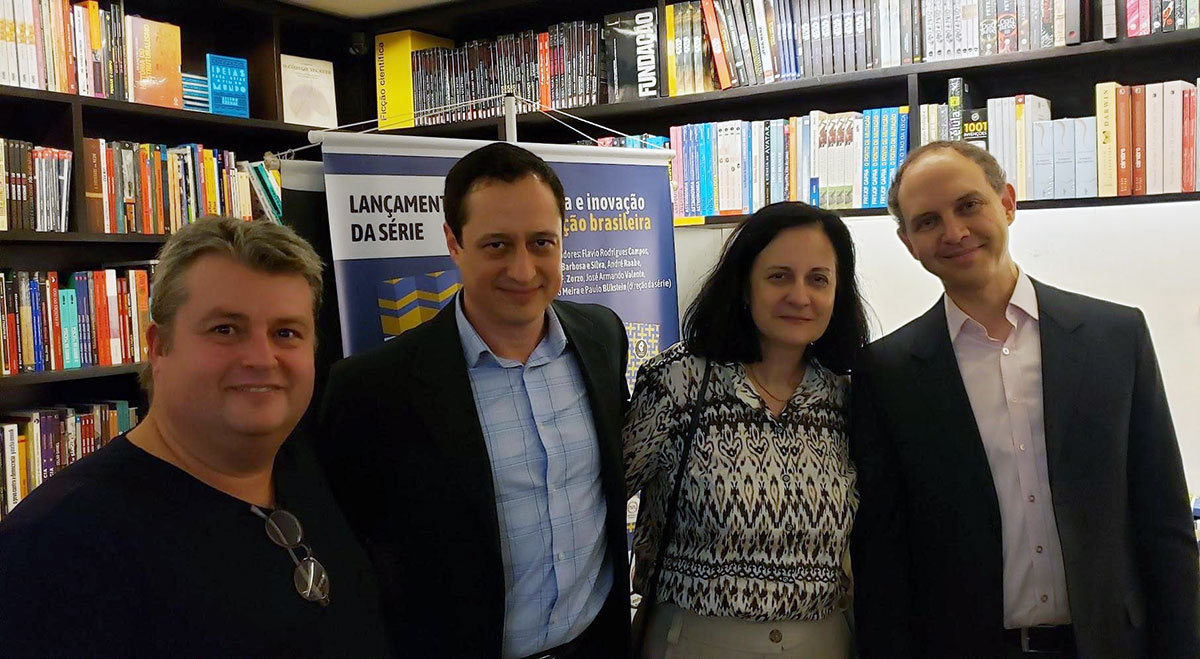
This Summer, researchers from the Lemann Center Stanford and Columbia University were in Sao Paulo to present the collection “Tecnologia e Inovação na Educação Brasileira.”

At Livraria da Villa auditorium, more than a hundred educators, scholars, and educators discussed technologies and innovation in Brazilian education. The event had two panels. The first panel discussed the importance of a collection of best practices to the Brazilian ecosystem of technology and innovation in Education. Professor Roseli de Deus Lopes, USP; Betty Almeida, PUCSP; and Camila Pereira, Lemann Foundation discussed challenges, opportunities, and the potential of technology and innovation in education. Following the discussion, professor Paulo Blikstein and co-organizers presented the five books to the community. According to the organizers, the collection is essential to share meaningful experiences employing technology and innovative practices in education. The first two books bring experiences in public schools, rural areas, universities, and research centers.

Tecnologia e Inovação na Educação Brasileira is a collection of five books organized by professor Paulo Blikstein and former Visiting Scholars and Visiting Students Researchers: Andre Raabe (Computação na Educação Básica), Flávio Rodrigues de Campos (Inovações Radicais na Educação Brasileira), José Armando Valente (Construção da Informática na Educação Brasileira), Luciano Meira (Ludicidade, Jogos Digitais e Gamificação na Educação), and Rodrigo Barbosa e Silva (Robótica Educacional). From Brazilian Society of Computing, Avelino Zorzo is also a coauthor of the book Computação na Educação Básica.

Rodrigo Barbosa e Silva, currently Postdoctoral Research Scholar at Stanford, states that the collection highlights how technologies are evolving to comply with educational requirements. Rodrigo affirms that technology is a human aspect, and it is already present in schools. For instance, Rodrigo believes that robotics education has a long history of successful experiences in schools. “Our challenge,'' says Rodrigo, “is to democratize robotics. It is not possible to accept that education continues to be divided between students with access to everything, including digital technologies, and others with nothing, confined to outdated practices”.

According to Mr. Barbosa e Silva, public universities in Brazil are responsible for the success of cutting-edge robotics education platforms presented in his book co-organized with professor Blikstein. Among 60 authors, 56 of them either studied or worked in public institutions. Also, the experiences show that public institutions mostly produce open platforms, free software, and open hardware. These open resources are freely available to anyone to use, without any need to pay royalties, licenses, and services.

Professor Campos states that the book Radical Innovations in Brazilian Education describes experiences of innovative schools in Brazil. Also, it presents educational practices from educators who changed their classroom environment to promote innovations in teaching and learning practices. Therefore, the book presents 43 chapters and more than 75 authors, from kindergarten to university, intending to foster reflections related to education and schooling.

The collection, edited and commercialized by Editora Penso, is composed of five books, 371 authors, and 131 chapters. The two first books are already printed and on sale:

Lemann Center Fellow presentation at ABAVE 2019 is featured in the Brazilian media

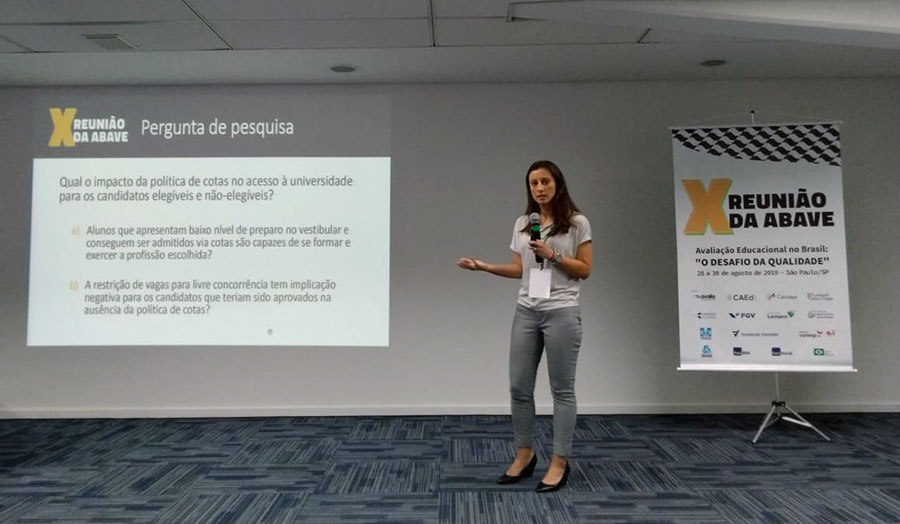
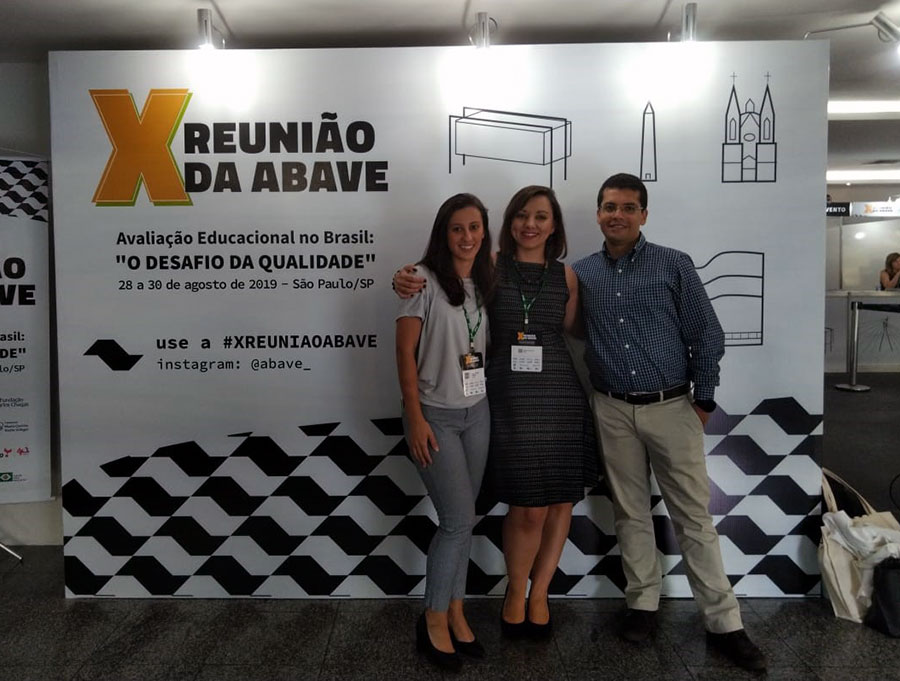
Research presented by Stanford’s Lemann Center Fellows at the 10th reunion of the Brazilian Association for Educational Evaluation (ABAVE), which took place in São Paulo over the last week of August, got plenty of attention from academics of various fields, policy makers, and journalists who were attending the event.

In particular, the research presented by the Lemann Fellow Ana Trindade Ribeiro, examining the long term effects of a higher education quota policy, caught the attention of Antonio Gois, Education Journalist. Antonio Gois wrote about the findings on his Monday column at O Globo, one of the biggest newspapers in the country. According to the journalist, his interest in Ana’s study, coauthored by Prof Fernanda Estevan (FGV-SP), was due to the fact that it presented clear evidence on the effects of the quota policy passed admissions to college. In Brazil, college applicants have to choose a major beforehand, so the analysis is restricted to applicants who wish to major in Law, measuring their chances of approval on the certification exam after college, necessary to become a lawyer. Only low-income students from public schools or that self-declare as black or brown are eligible to apply through the quota policy. Comparing candidates that score close to the admissions cutoff (below and above), the study shows that beneficiaries of the policy have an increase of up to 51p.p. in their chances to become a lawyer. Moreover, there is no evidence of a negative effect on lawyer certification for non-quota candidates who would’ve been admitted if the policy hadn’t been in place, suggesting that these students are able to be placed at other universities’ law programs of similar quality to UERJ.

Lemann Fellow Ana Trindade Ribeiro presenting at ABAVE

Ana Trindade Ribeiro, Barbara Born, and Leonardo Rosa at ABAVE


Mais um estudo sobre cotas na Uerj

Os projetos apresentados pelos Fellows do Stanford Lemann Center na 10ª reunião da Associação Brasileira de Avaliação Educacional (ABAVE), que ocorreu em São Paulo na última semana de Agosto, receberam bastante atenção do público presente, incluindo acadêmicos das mais variadas áreas, membros do poder público e jornalistas.

Em especial, a apresentação da Lemann Fellow Ana Trindade Ribeiro, sobre o efeito da política de cotas da UERJ, capturou a atenção do jornalista Antonio Gois, que logo publicou o estudo em sua coluna do jornal O Globo. O interesse do jornalista de educação pelo trabalho de Ana, com coautoria da Prof. Fernanda Estevan (FGV-SP), se deu pelo fato de que o estudo apresenta evidência clara dos efeitos da política após a universidade. A análise se baseia em candidatos ao curso de Direito, avaliando o efeito da política na chance de aprovação na OAB, necessária para o exercício da advocacia. Comparando candidatos próximos à nota de corte de Vestibular UERJ para cada tipo de vaga, o estudo mostra que a política de cotas aumenta a chance de aprovação na OAB em até 51p.p. para beneficiários (cotistas). Por outro lado, não há evidência de efeito negativo para candidatos que poderiam ter sido admitidos na ausência da política, sugerindo que estes candidatos foram admitidos em outras universidades de qualidade similar à UERJ. Acesse o link da matéria de O GLOBO para assinantes aqui.

Parents Know Better Than Standardized Tests

By Jason Bedrick and Corey A. DeAngelis

Thanks to private-school choice—vouchers, tax-credit scholarships and education savings accounts—this year nearly half a million children in 29 U.S. states and the District of Columbia will attend schools their parents selected.

Critics of school choice often argue that low-income families lack the knowledge or ability to choose meaningfully between schools. Worrying that parents will be taken advantage of or make poor decisions, they oppose choice programs or favor onerous testing requirements to prove they are effective.

New studies on school choice in Colombia and Barbados, however, suggest families know something that tests can’t detect. These two countries, with per capita incomes a quarter and a third of America’s, respectively, can teach us a lot about how the most economically disadvantaged families choose schools.

Stanford’s Eric Bettinger and his research team found that students who won a lottery for a voucher in Colombia were 17% more likely to complete high school on time than students who lost the lottery. The study, released in July, used a method of random assignment to compare apples to apples. So it isn’t because of selection bias that lottery winners earned 8% more than lottery losers by the time they turned 33. It’s because their parents were allowed to choose schools that were better fits for their children.

...

Martin Carnoy on Transforming Comparative Education: Fifty Years of Theory Building at Stanford

Congratulations to Lemann Center 2019 Master Graduates

Pages