Skip to content Skip to navigation

Lemann Center Webinars

Inspiring Confidence In Education With VR - Part Two

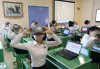
Virtual Reality (VR) has shown its incredibly immersive potential in arts and entertainment, but can it be an equally powerful, and cost-effective, educational tool? In part one of this article we heard from Scott Likens, emerging technology leader at PwC, discussing a recent report by the analyst that found VR can be faster, more effective, and more engaging than classroom learning or digital training exercises, at least when used to teach ‘soft’ human skills such as diversity and inclusion.

To dive deep into the educational capabilities of this technology, I talked to Dr. Anna Carolina Muller Queiroz, researcher at Stanford University, to find out about her research into schools, and the effects that VR can have on childrens’ ability to learn and their confidence to gain new skills and self-belief.

Virtually proficient

Dr. Anna Queiroz is a post-doctoral researcher at the Lemann Center at the Graduate School of Education at Stanford University and also at the Virtual Human Interaction Lab at Stanford University. Alongside PwC’s report, Dr. Queiroz gave me a more comprehensive picture of VR’s effectiveness as an educational tool, and offered some fascinating insights from her own research. Dr. Queiroz runs two research studies at a middle school in California using students from sixth to eighth grade (ages 11-13) to compare the effectiveness of computer-based learning and VR on their conceptual knowledge.

...

Click here to read full article.

Saiba como funciona do Centro Lemann de pós-graduação em Stanford

Com o objetivo de apoiar a formação de líderes focados em impacto social pela educação, a Fundação Lemann mantém centros de pesquisa e apoio a estudantes brasileiros de pós-graduação em algumas das mais renomadas universidades do mundo, como a Universidade de Stanford, nos Estados Unidos.

Neste vídeo, o professor e economista Martin Carnoy explica como funciona o Centro Lemann de Educação, Empreendedorismo e Inovação que está dentro da Universidade de Stanford. Além de oferecer bolsas de estudo para mestrado e doutorado, o Centro Lemann promove atividades e debates que envolvem ideias e soluções para a educação brasileira.

Localizada próxima ao Vale do Silício, a Universidade de Stanford é conhecida pelo sua atmosfera inovadora. Para mais informações sobre o Centro Lemann de Stanford, acesse: https://lemanncenter.stanford.edu/.

Pesquisas econômicas avançam e apontam como racismo perpetua fosso social

Os economistas Claudio Ferraz e Tássia Cruz chegam a uma conclusão parecida em relação às chances de sucesso da população preta e parda na política.

Analisando dados das eleições municipais na Bahia em 2004, os pesquisadores mostraram que a probabilidade de vitória de candidatos pretos era 30% inferior à de brancos com nível educacional, partido, idade, sexo e gastos de campanha iguais.

A mesma comparação entre postulantes pardos e brancos indicou uma chance 17% menor de eleição do primeiro grupo em relação ao segundo.

Especial FUNDEB com Filomena Siqueira, Talita Nascimento e Tassia Cruz

How Immersion Effects Learning | Digital Puppeteering for Psychosocial Immersion

Watch Anna Carolina Queiroz, Researcher at the Virtual Human Interaction Lab at Stanford University and Lemann Center fellow, discuss her findings on "EFFECT OF IMMERSION ON COGNITIVE AND AFFECTIVE LEARNING".

Anna presented the results of two studies comparing the effect of educational immersive virtual reality (VR) videos and 2D videos on cognitive (i.e. conceptual knowledge) and affective (i.e. self-efficacy) learning outcomes at multiple time points. Results suggest that VR positively impacts self-efficacy when compared to a desktop computer. Also, it reveals that presence and self-efficacy mediated both affective and cognitive learning outcomes. These findings corroborates and expand previous studies, contributing to the role of IVR on education, particularly the impacts of IVR on the affective aspects of learning.

Ana Machado named to Forbes Brazil under 30

Ana Machado, Lemann Center master student, has been named to Forbes Brazil under 30.

The list of promising youngsters Under 30 is the highlight on the cover of the new edition of Forbes Brasil . The selection of highlights under the age of 30 brings 90 names divided into 15 different categories, from sports to finance, is already in the apps and newsstands.

Martin Carnoy and Eric Bettinger named to the 2020 RHSU Edu-Scholar Public Influence Rankings

Congratulations to Martin Carnoy and Eric Bettinger who are named to the 2020 RHSU Edu-Scholar Public Influence Rankings.

The metrics recognize university-based scholars in the U.S. who are doing the most to influence educational policy and practice. The rubric reflects both a scholar's larger body of work and their impact on the public discourse last year.

For the full list and to learn more about the rankings, visit Rick Hess Straight Up in Education Week.

In education, there is no silver bullet and no guesswork

"Em educação não há bala de prata, nem achismos" ( "There are no silver bullet, nor 'guesswork' on education", in free translation) is the first of a series of articles by Jair Ribeiro, Visiting Policy Scholar, for the Brazilian newspaper Folha de São Paulo.

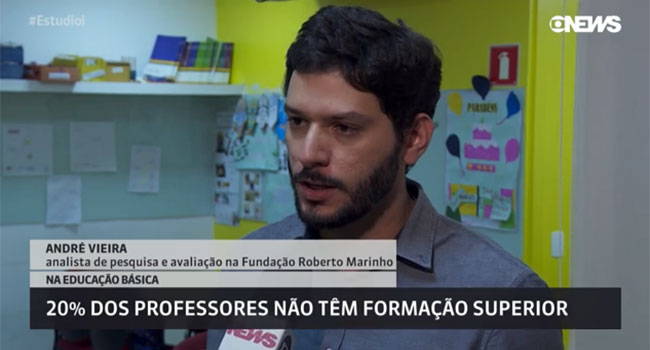
Andre Vieira on teacher’s education in Brazil

Andre Vieira, a researcher at the Roberto Marinho Foundation and a Lemann Center Fellow, commented on recent data about teacher’s education in Brazil broadcasted on a national news network.

Professionalism of teachers and strategies for strengthening it: Interview with Lee Shulman

The interview with Lee Shulman, professor emeritus at the Stanford Graduate School of Education, addresses the fundamental ideals of his career in the field of teacher education. Considering the need to rethink how pre-service teacher education is organized, this interview offers a deep immersion into Shulman’s scholarship, particularly those pieces that tackle the centrality of schools and practice during pre-service training, the relationship between universities, public policies, and teaching, and also the professionalism involved in teaching. The starting point of this conversation is how this author defines teaching and which are the challenges of professionalism in this trade. Another core idea explored in the interview is the category of pedagogical content knowledge, a concept developed by Shulman in 1984 to define the knowledge grounds of teaching and how they make this profession different from other careers. Such a concept was profoundly influential in the field of teacher education. Throughout the conversation, Professor Shulman emphasizes that teaching requires more than only mastering the contents. A teacher needs to understand different ways of representing the content, a plethora of different interpretations that students can have of such content, as well as discrete teaching strategies that fit a variety of contexts. Besides, Shulman talks about the responsibilities of the universities in preparing professional teachers, as well as the foundations and strategies to make sure that teachers’ learning experience is grounded in practice, focused on developing the novices to teach for equity, ensuring high-quality education. Finally, Shulman provides advices to three groups of core actors in this context: researchers and university-based teacher educators, policymakers, and teachers.

Pages