

Nudging Freshmen to Persist? Evidence from Two Large Private Colleges in Brazil
About the presentation
This presentation will share ongoing research on text-message–based interventions designed to support college persistence among undergraduate students in Brazil. The study evaluates two large-scale randomized controlled trials conducted in 2024, reaching more than 120,000 students enrolled at private higher education institutions. The intervention consists of low-cost, periodic digital messages—delivered via SMS, WhatsApp, and push notifications—intended to promote academic engagement, support goal setting, and provide timely information about institutional resources and deadlines.
While SMS-based outreach has become a common tool to foster student success in higher education, rigorous evidence from middle-income country contexts remains limited. Most prior studies are concentrated in high-income settings, leaving open questions about the effectiveness of such behavioral interventions at scale in places like Brazil, where structural barriers to persistence differ and digital communication channels may have broader reach.
This study also examines the intervention in the context of Brazil’s private higher education sector, which diverges significantly from the for-profit college landscape in the United States. Whereas U.S. for-profit institutions are often associated with low academic quality, limited value-added, and poor labor market outcomes (Cellini & Chaudhary, 2012; Deming, Goldin, & Katz, 2012), Brazil’s private institutions serve a broader population, charge substantially lower tuition, and are associated with higher average returns to higher education. These contextual differences suggest that, in Brazil, interventions promoting persistence are more likely to yield socially and economically desirable outcomes.
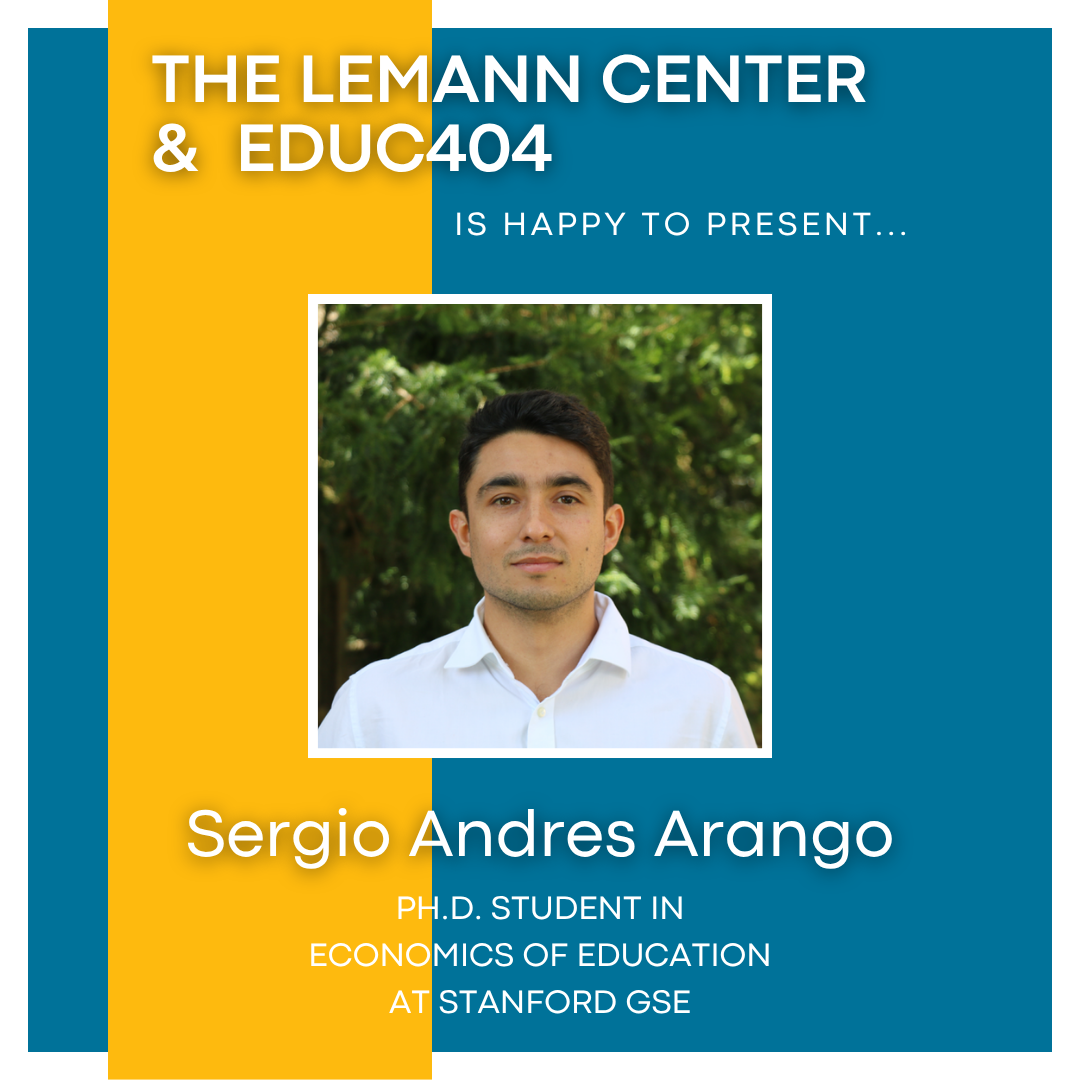
About Sergio Arango
Sergio Arango is a PhD student in Economics of Education at the Stanford Graduate School of Education. He studied Economics and earned a master’s degree in Economics in Colombia. Before beginning his PhD, he worked in several public agencies of the Colombian government, including ICFES (the national standardized testing agency), the Division of Education at the Department of National Planning, and collaborated with foundations such as Empresarios por la Educación. He was also a Predoctoral Research Fellow at the Tobin Center for Economic Policy at Yale University, where he contributed to research on coordinated school assignment and school choice policies in the United States and Latin America.
